
What Café Owners Should Look for in an EPoS System
Choosing the right café EPoS system is crucial for day-to-day operation. For café owners, the right EPoS system should make service faster, reduce pressure on staff, improve order accuracy, and give better visibility over what the business actually needs. It should support growth without adding unnecessary complexity. Most importantly, it should help the business run more efficiently during the busiest parts of the day, when speed and consistency matter most.
The challenge is that many EPoS systems look impressive on paper but fail to solve the real problems cafés deal with every day. A feature list may sound strong, but if the system slows down service, makes training harder, or creates friction during peak hours, it quickly becomes part of the problem rather than the solution.
For café owners reviewing their options, the focus should not be on which system sounds the most advanced. It should be on which system best supports daily operations, staff productivity, and customer experience.
In this blog, we will look at
-
What café owners should prioritise when choosing an EPoS system
-
Why the right setup should support the way a café actually operates
Why This Decision Matters More Than Many Café Owners Realise
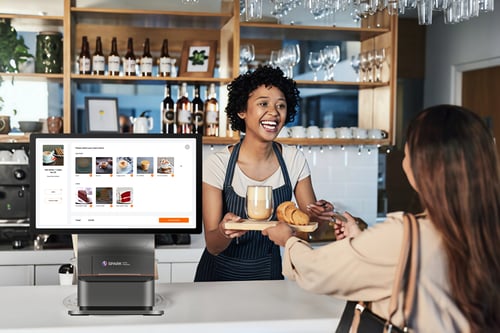
For many cafés, the till setup gets judged on one basic question: Does it work?
But that is often too narrow.
A system may still process payments, print receipts, and get orders through, but that does not mean it is helping the business perform well. If queues build too easily, staff take too long to find products, modifiers cause confusion, or reporting is too limited to guide decisions, the system may already be holding the business back.
This is often where café owners start to reassess what they really need. The issue is not whether the current setup functions at a basic level. It is whether it supports faster service, smoother operations, and better control across the day.
For owners reviewing whether their current setup is supporting growth or slowing it down, this is often the point where a better EPoS system starts to show its value.
Speed of Service Should Be a Priority
In a café environment, speed matters. Whether it is the morning coffee rush, lunchtime trade, or a busy weekend period, customers expect fast and simple ordering. Even short delays at the till can affect queue length, customer satisfaction, and the number of orders that can be processed in a limited timeframe.
A good EPoS system should help staff move through orders quickly and confidently. The screen layout should be easy to navigate, products should be simple to find, and commonly ordered items should be easy to access. In a busy café, staff should not need to spend extra time searching through menus or correcting small input errors.
This matters even more in businesses with high order volume and lower transaction values. In those environments, efficiency is directly tied to revenue. If the system helps staff serve faster, it can improve throughput without increasing labour pressure.
For café owners, this is one of the clearest signs of value. A good EPoS system should help the business handle busy periods more effectively without making service feel rushed or inconsistent.
The System Should Be Easy for Staff to Learn and Use
A café can have the right menu, the right location, and strong customer demand, but if the team struggles with the till, service quality will suffer.
Ease of use is often underestimated when café owners compare EPoS systems. It is easy to focus on technical capability and forget that the system will be used by front-of-house staff every day, often during fast-paced and pressured service periods.
The right setup should reduce training time and make day-to-day use feel straightforward. New starters should be able to learn the basics quickly. Existing team members should be able to process orders with minimal friction. Managers should not have to spend unnecessary time fixing errors or explaining complicated workflows.
This becomes especially important for cafés with part-time staff, seasonal workers, or high employee turnover. The more intuitive the system is, the easier it becomes to maintain service standards across the team.
Order Customisation Needs to Be Simple
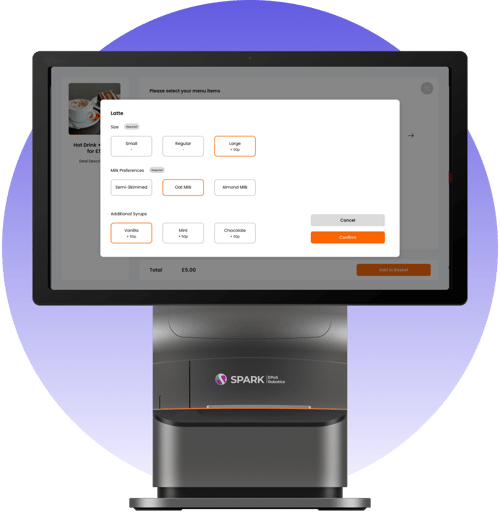
For many cafés, a standard menu is only part of the picture. Customers regularly ask for milk alternatives, syrup options, extra shots, temperature adjustments, size upgrades, and food changes. In beverage-led businesses such as bubble tea shops, juice bars, and modern coffee concepts, customisation can be even more important.
If an EPoS system does not handle modifiers well, order taking becomes slower and more error-prone. That can lead to mistakes, remakes, wasted ingredients, and unnecessary pressure between front and back of house.
A strong café EPoS setup should make customisation clear and easy to follow. Staff should be able to select modifiers quickly, the order should be easy to read, and the workflow should support accuracy rather than rely on memory or verbal clarification.
This is where the right system adds real operational value. Clear order customisation is not only about giving customers more choice. It also helps cafés protect margin, reduce waste, and maintain consistency across service.
For owners looking at the bigger picture, this is an important consideration. The more precise the order flow, the easier it becomes to manage quality and keep service moving during busy periods.
Payment Flexibility Should Support the Way Customers Buy
Speed, convenience, and flexibility now play a big role in the checkout experience. In a café setting, that means the payment process should feel fast and seamless, whether a customer is buying a single coffee, placing a larger takeaway order, or visiting regularly throughout the week.
The right EPoS system should support integrated payments that work smoothly with the ordering process. The goal is to reduce friction at the point of sale and keep queues moving, especially when every second matters.
This is one reason many businesses look for solutions such as SPARK Pay, which helps bring payment and point of sale into one smoother workflow. When the payment side works naturally with the wider system, cafés are in a better position to serve faster and reduce avoidable delays.
Stock Control Should Help Reduce Waste
Cafés work with products that are highly sensitive to waste and demand fluctuation. Milk, syrups, pastries, fresh ingredients, and grab-and-go items all need to be monitored carefully. Over-ordering affects margin. Under ordering affects service and availability. Neither is ideal.
That is why stock visibility matters.
A café EPoS system should help owners understand:
-
What is selling
-
What is moving slowly
-
What needs closer control
Better reporting around product performance and stock levels can support more confident purchasing decisions and reduce unnecessary waste.
From a buyer's perspective, stock control is valuable because it links directly to profitability. It helps owners protect margin without relying solely on instinct. It also supports more efficient operations by reducing the number of surprises that appear during busy trading periods.
Reporting Should Make the Business Easier to Manage
An EPoS system should not just record transactions. It should help café owners understand how the business is performing.
That includes:
-
Visibility over best-selling items
-
Peak trading times
-
Staff activity
-
Category performance
-
Overall sales trends
The aim is not to create more admin. It is to give owners clearer information so they can make stronger decisions.
For example, if a café owner can clearly see:
- Which drinks drive the most revenue in the morning
- Which products are underperforming in the afternoon
- Which days generate the highest takeaway demand
They will be in a much better position to plan staffing, refine the menu, and improve profitability.
Signs Your Café May Have Outgrown Its Current Till Setup
One of the most effective ways to assess an EPoS system is to look at the signs that the current one is no longer keeping up.
That may include:
-
Queues are building too easily during peak times
-
Staff are taking too long to learn the till
-
Modifiers causing order errors
-
Stock visibility is too limited
-
Reporting failing to support decision-making
In some cafés, it can also show up in slower service, inconsistent order handling, or difficulty expanding into new ways of serving customers.
The Right Setup Should Match the Café’s Service Model
Not every café operates in the same way. Some are small independent coffee shops focused on fast counter service. Others handle food, collection, loyalty, and high levels of customisation. Some beverage businesses rely heavily on takeaway volume, while others need a setup that supports multiple order points.
That is why owners should look beyond the idea of a single standard till system. The right EPoS setup should reflect how the business actually runs.
For some cafés, a core EPoS System and integrated payment setup may be enough. For others, additional tools such as SPARK Handheld, Self Ordering Kiosk or Stock Control may become valuable depending on the complexity of service.
Find an EPoS Setup That Fits the Way Your Café Works
For many café owners, the real question is not whether the current setup still works. It is whether it is still working well enough for the business they want to run.
If you are reviewing your current setup or planning a new café operation, the best EPoS system is the one that supports faster service, clearer control, and more efficient day-to-day running.
Speak to SPARK about an EPoS setup designed around the real needs of cafés, coffee shops, and beverage businesses, and explore what a better fit could look like for your operation.
Book a demo today and explore how you can turn everyday transactions into long-term customer relationships.
Relevant Topics
Modern Payment Solutions in UK Hospitality
Handheld or Fixed EPoS Terminals: How to Choose the Right Setup
Which and How Many EPoS Systems Do You Need for Your Business?