
How a Kitchen Display System Supports UK Chain Restaurants
For a growing chain restaurant, the pressure rarely starts with one major breakdown. It usually begins with smaller operational gaps that build over time.
During busy hours, chain restaurants need systems that reduce friction rather than add to it.
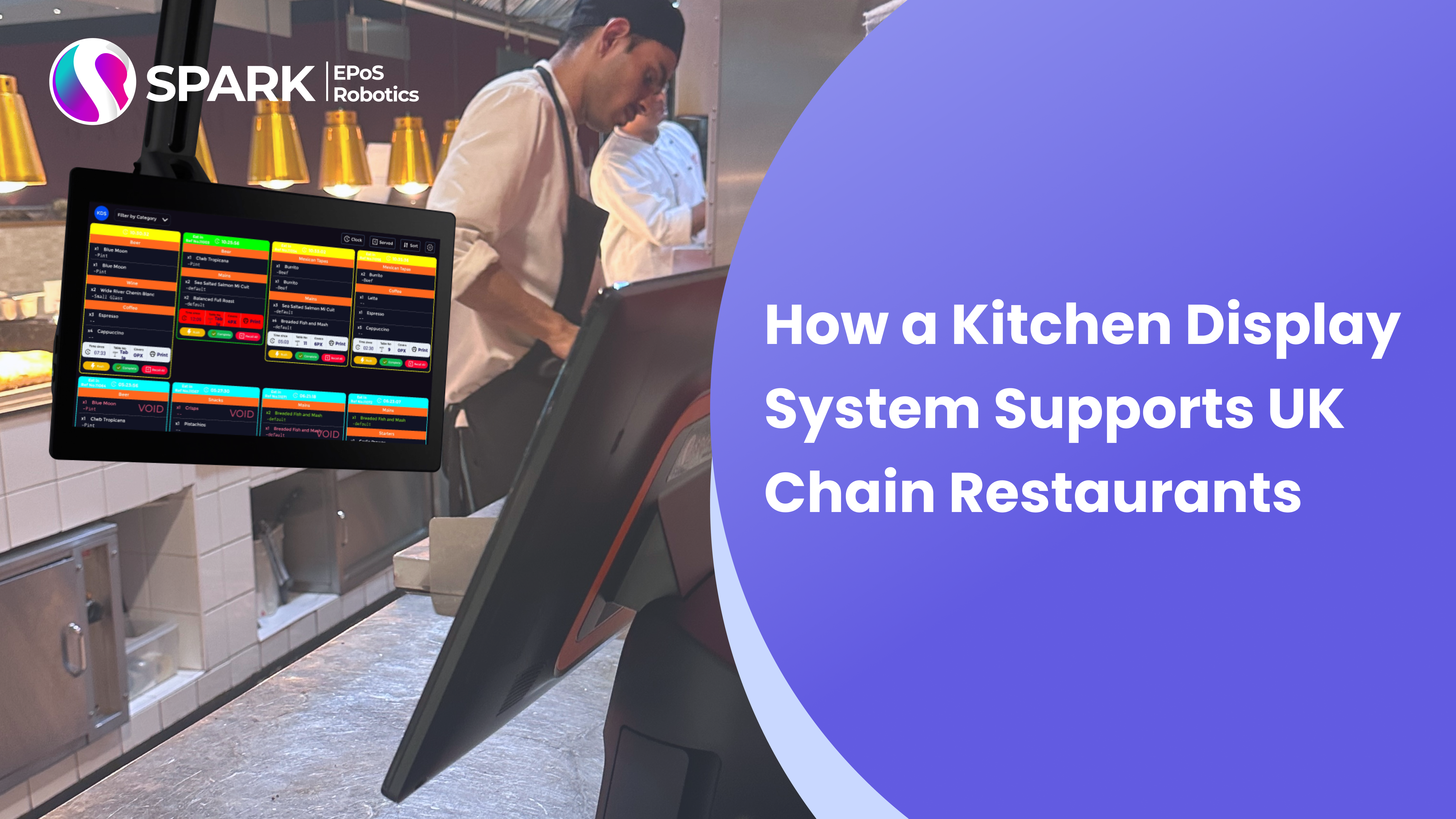
A Kitchen Display System is one of the clearest examples of that. It helps orders move from front of house to kitchen more clearly, gives teams better visibility during busy periods, and supports greater consistency across sites. For chain restaurants in particular, where service standards need to be repeatable across multiple locations, that kind of control matters.
In this blog, we will look at why Kitchen Display Systems have become more relevant for UK chain restaurants, where paper ticket workflows start to fall short, and how a connected kitchen setup can support faster, more accurate service as a business grows.
When Growth Starts to Expose Operational Gaps
The same menu may be running across multiple sites, but each kitchen is still dealing with real-world pressures in slightly different ways:
-
Peak times vary
-
Teams change
-
New starters need training
-
Delivery and collection volumes rise
Front and back of house communication becomes more stretched. What once felt like a small issue at one site can begin to affect speed, accuracy, and customer experience more widely.
That is often the point where a chain restaurant starts to see the limits of paper-based order handling. The challenge is no longer simply whether the kitchen gets the order. It is whether the kitchen gets it clearly, quickly, and in a format that helps the team stay in control.
How a Kitchen Display System Changes the Workflow
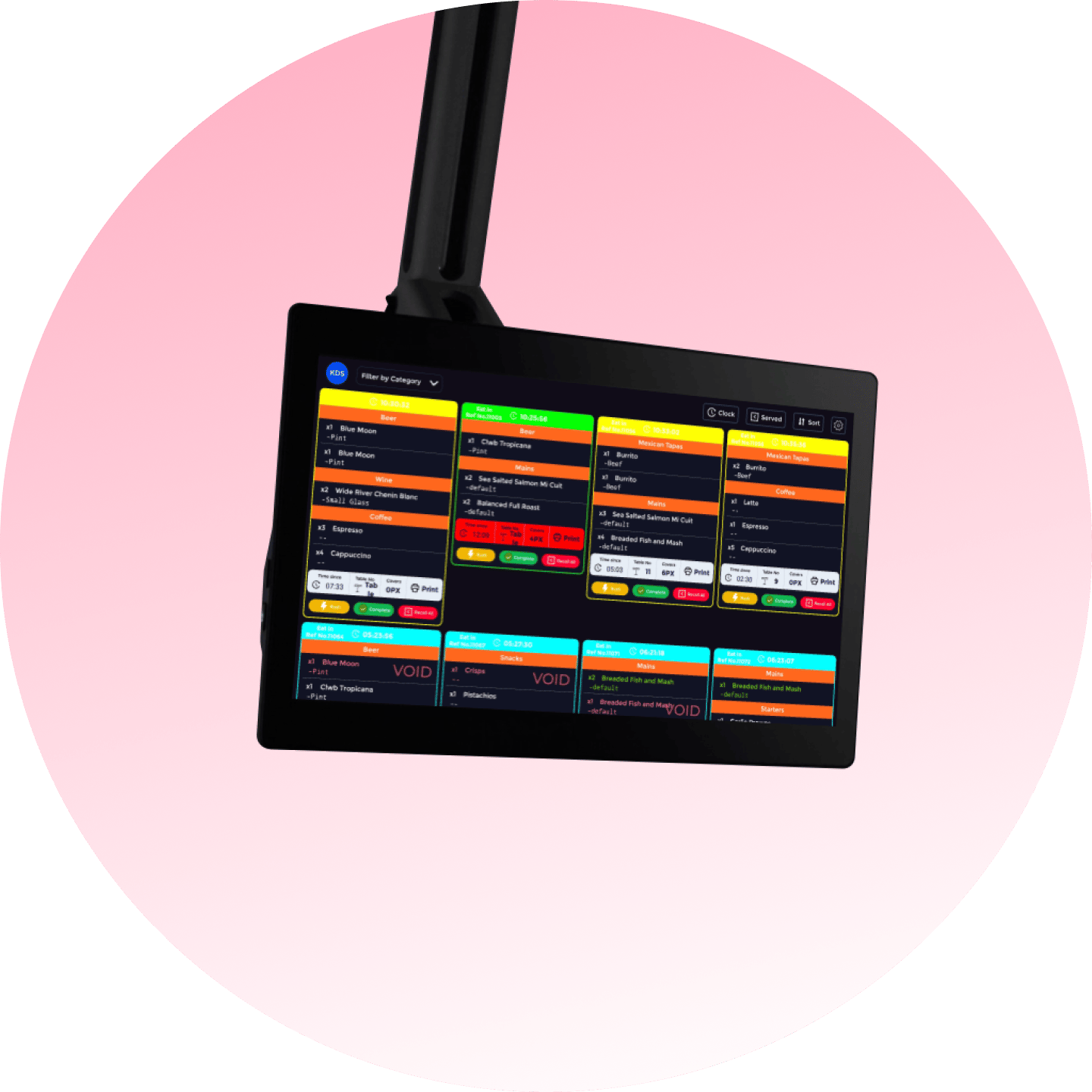
A Kitchen Display System with an integrated EPoS system helps replace a static, paper-based process with a more connected and visible one.
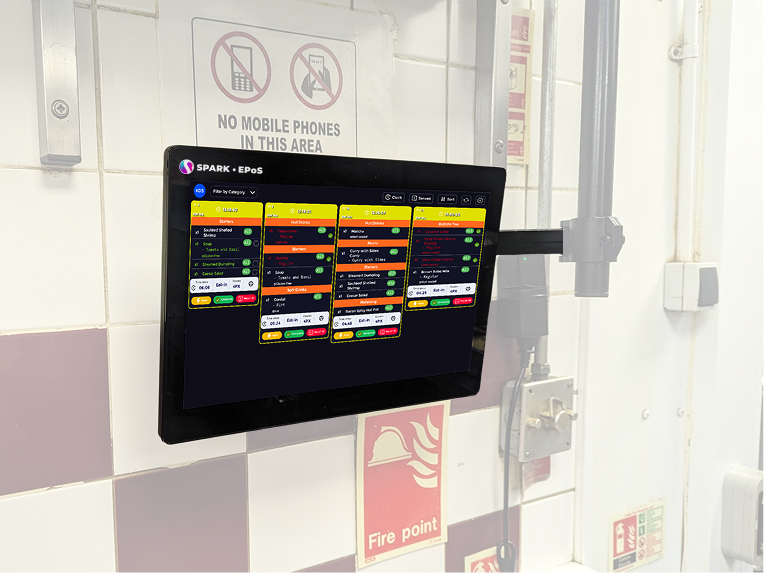
Instead of relying on printed tickets moving through the kitchen, orders appear digitally and can be routed more clearly to the right preparation points. That gives kitchen teams a better live view of what is coming in, what is in progress, and where pressure is building.
For chain restaurants, that operational visibility is valuable because it supports the kind of repeatable process that is harder to achieve with paper alone.
In practical terms, an efficient KDS can help by:
- making orders easier to read and follow
- reducing the chance of modifiers being missed
- improving communication between front and back of house
- helping teams work through orders in a clearer sequence
- supporting faster reactions during peak periods
The value is not in the screen itself. It is in what the screen removes. Less confusion. Less verbal back and forth. Less reliance on paper handling in a fast-moving kitchen.
Why This Matters More for Chain Restaurants
The operational case for a Kitchen Display System is stronger in a chain environment because chain restaurants are not only managing volume. They are managing standardisation.
Better Order Accuracy During Busy Service
One of the clearest advantages of a KDS is improved order accuracy.
In a restaurant, the issue is what happens as orders move through pressure points. Modifiers, allergies, add-ons, timed firing, and multiple channels all increase the risk of mistakes when communication is not clear.
A Kitchen Display System helps reduce that risk by making the order flow easier to follow. Instead of depending on paper tickets being read correctly under pressure, the kitchen sees a clearer digital version of what needs to be prepared.
For restaurant groups, this matters because accuracy problems do not only affect one table or one order. They affect waste, remake costs, customer satisfaction, and the consistency of the brand experience across locations.
Faster Service Without More Kitchen Pressure
Chain restaurants are often under pressure to serve more orders without simply adding more labour to the problem.
A Kitchen Display System helps on that front because it makes kitchen communication more efficient. Orders can move through the kitchen with less friction, which helps teams maintain pace during lunch, dinner, delivery surges, and other busy windows. When the workflow is clearer, the team has more chance of staying organised under load rather than constantly recovering from miscommunication.
Easier to Scale Across Multiple Sites
Growth tends to expose systems that were never designed to scale.
A chain restaurant may open with processes that work well enough in one kitchen, but as the business adds locations, the need for standardisation becomes more important. Different site managers may run the service slightly differently. Kitchen communication habits may vary. Training may not be as consistent as intended.
This is where a KDS becomes more than a convenience. It becomes part of building a more scalable operating model.
Build a Kitchen Workflow That Supports Growth
If your chain restaurant is reviewing how to improve order accuracy, reduce kitchen friction, and create a more consistent service model across sites, a Kitchen Display System is worth considering as part of a more connected setup.
Speak to SPARK EPoS about how a Kitchen Display System can support faster, more accurate service and help build a kitchen workflow that scales with your business.
Relevant Topics
Restaurant Tech for Smarter Service: Table-Side Ordering
How UK Chain Restaurants Can Optimise Table Turnover with EPoS